Iranian Society Pushes for End to Stadium Ban

Women Have a Right to Attend Sporting Events

Iranian authorities once again prevented women and girls from entering a sports stadium.

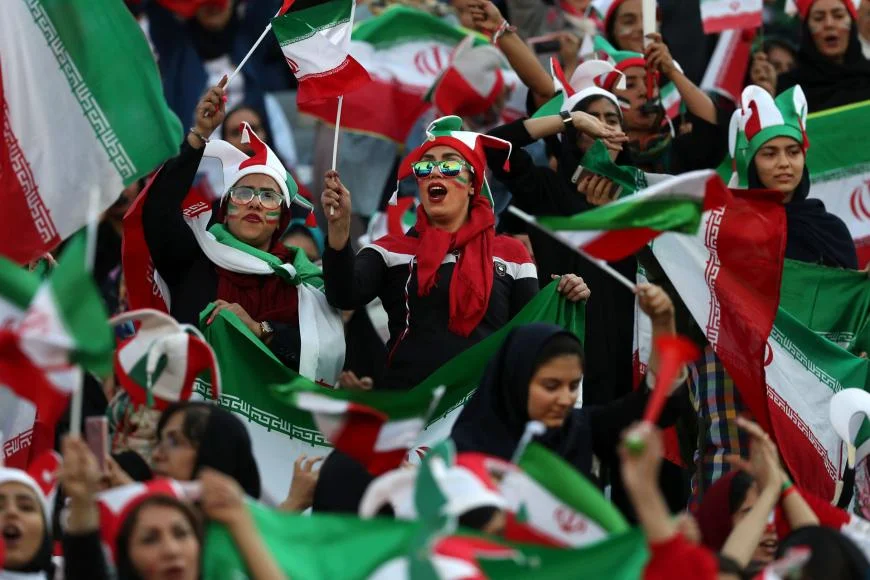
Iran’s football team played Lebanon in a FIFA World Cup Qatar 2022 qualifying match in the city of Mashhad last week. But authorities prevented dozens of women who had reportedly purchased tickets for from entering the stadium.

Additionally, videos circulating on social media suggested that some women outside the stadium were possibly attacked with pepper spray.

Iranian women have been campaigning against the government’s stadium ban for more than 15 years. Under pressure from Iranian women, in 2019 FIFA, football’s governing body, finally set a deadline for Iranian authorities to allow women into stadiums. One month later, Iran’s government permitted a limited number of women to attend a World Cup qualifier match at Azadi Stadium. Since then, Iranian officials have used various tactics to keep women from watching matches at stadiums.

What was the excuse this time? The Iranian Football Federation issued a statement claiming, without evidence, that “fake” tickets were distributed among fans.

Yet Iranian authorities’ refusal to overturn the stadium ban has actually helped grow the cause – not only among women, but also among athletes and male sports fans.

On March 30, the day after the Iran-Lebanon match, Karzar, a popular domestic Iranian online petitioning platform, launched a petition asking President Ebrahim Raisi to investigate the incident.

In a video circulated on social media on March 31, male football fans in Isfahan football stadium sang together, “There is no difference between men and women, we all love football.” Amir Hossein Sadeghi, a former Iranian football player, said in an Instagram story that he won’t go to a stadium until women are allowed too. People speaking out against the ban included Voria Ghafoori, who both plays for the national football team and captains an extremely popular team in Iran’s football league, and Ali Daei, the legendary football player who attended the World Cup final draw in Doha. Both called the events in Mashhad “shameful.”

Despite the restrictions, and the risks to their safety when they speak against the government, Iranian women have become more innovative and outspoken in demanding their rights.

Iranian authorities should stop fighting this discriminatory and losing battle and overturn this ban. FIFA should support Iranian women in demanding their rights and not let one of its members violate FIFA’s own rules of equal access to stadiums and sports events for men and women.
Related news

A supporter wears the Senegalese national flag in Dakar on February 2, 2022 after Senegal's win against Burkina Faso during the Africa Cup of Nations 2021 semi-final football match. © 2022 CARMEN ABD ALI/AFP via Getty Images

Youth Football Dream Turned Into Nightmare

Senegalese Player Cheikh Touré’s Death Reignites Football Trafficking Debate On November 2, a funeral was held for Cheikh Touré, a promising young Senegalese goalkeeper, after his body was finally returned to his family from Ghana. According to media reports, Touré had traveled to Ghana to meet people he believed to be football scouts. They allegedly kidnapped him, extorted money from his mother, and […]

READ MORE

Image shows purple background with broken volleyball net

Australia: Van de Velde denied visa for World Beach Volleyball Championships

Content warning: This statement mentions sexual assault, rape, and the abuser’s name. (Amsterdam, October 28, 2025) – Kyniska Advocacy, The Army of Survivors, and the Athletes Network for Safer Sports, are once again calling on the sports world to take action to prevent athletes convicted of sexual offenses from competing on the global stage. Last year, […]

READ MORE

Related resources

“It’s often still dangerous for athletes to speak out.”

“It’s often still dangerous for athletes to speak out.”

Workshop Recap: Athletes as Human Rights Defenders The Athletes Network for Safer Sports held a workshop on June 27th on the topic of “Athletes as Human Rights Defenders.” Moderated by Network Coordinator Joanna Maranhão, the session explored what athletes face when they speak up for human rights and what practical measures should be put in […]

READ MORE

Episode 3: “Sometimes We Can’t See”

Episode 3: “Sometimes We Can’t See”

Understanding the data on abuse in sports Watch the third and final episode of our research series on violence in sports: “Sometimes We Can’t See.” In this video, we explore why violence is often normalized in sport – and why it’s so hard for athletes, coaches and others to recognise when they see it, when […]

READ MORE

Submission to UN Human Rights Report on a World of Sport Free Racism, Racial Discrimination, Xenophobia and Related Intolerance

Submission to UN Human Rights Report on a World of Sport Free Racism, Racial Discrimination, Xenophobia and Related Intolerance

Countering Hate and Discrimination Against All People Impacted in Sport The world of sport is often perceived as a place in which none of the burdens and inequalities of society take place or could possibly exist. Embedded by ideals of excellence, respect and friendship, its philosophy often misleads people to discount the importance of critical […]

READ MORE

Join the Network

Sport has the potential to be a catalyst for human development, unity, and freedom, but too often it instead brings harm to its athletes, fans, and communities. We exist to uncover and rectify the many abuses that exist both in and around sport. We aim to transform sports into an authentic force for good.