Japan: Establish Safe Sport Center

Protect All Athletes as a Legacy of Tokyo Olympics, Paralympics

(Tokyo) – The Japan Sports Agency and Tokyo Organizing Committee of the Olympic and Paralympic Games should establish an independent national body to address the abuse of athletes in Japan, six Japanese and international nongovernmental organizations said today.

On October 12, 2021, Athlete Save Japan, Human Rights Watch, Japan Judo Accident Victims Association, Japan Safe Sport Project, Kantokuga Okottewa Ikenai Taikai, and Unisocc wrote to the Japan Sports Agency commissioner, Koji Murofushi, and the Tokyo Organizing Committee president, Seiko Hashimoto, and urged them to make a commitment to create a safe sport center.

Such a center would create a way for athletes to report abuse and for the authorities to track how the report is handled. It would establish meaningful remedies for athletes and parents and deter child abuse by identifying and decertifying abusive coaches. It would also provide activities to promote the concept of safe sport and access to professional legal assistance for athletes.

“Japanese athletes have long faced a harsh reality that in order to compete, they must endure abuse and mistreatment,” said Shoichi Sugiyama, a lawyer for athletes’ rights and founder of the Japan Safe Sport Project. “Japan can and should lead the global movement for reforms to protect children and athletes in sport.”

A Human Rights Watch report issued on July 20, 2020, “‘I Was Hit So Many Times I Can’t Count’: Abuse of Child Athletes in Japan,” documented that child athletes in Japan suffer physical, sexual, and verbal abuse when training for sports. Japanese sport has a history of corporal punishment against children, known as taibatsu.

In the years-long preparations for the 2020 Olympic and Paralympic Games in Tokyo, many Japanese athletes, parents, and human rights groups documented abuses such as more than 100 deaths of athletes in judo training since 1983.

The organizations also created the #AthletesAgainstAbuse campaign in Japanese and English calling for the establishment of a Japan Safe Sport Center.

“During the Tokyo Olympic and Paralympic Games, all eyes were on Tokyo,” said Kanae Doi, Japan director at Human Rights Watch. “Now, after the Games have closed, the attention shifts to their legacy and the long-term human rights benefits the Games can bring to children and families in Japan.”

Institutional gaps blunt Japan’s response to and prevention of abuse in sports. Currently in Japan, sports organizations have a primary responsibility to address abuse and protect athletes. Without clear and comprehensive athlete protection protocols from the governmental Japan Sports Agency, sports organizations on their own must create systems for the prevention, reporting, investigation, and punishment of athlete abuse. This fragmented authority structure has resulted in inconsistent and inadequate systems for protecting athletes.

“Japan at long last needs to set up a national independent body to address all allegations of athlete abuse,” said Keiko Kobayashi, former director of Japan Judo Accident Victims Association. “My son became severely disabled from taibatsu during judo training. His case is only the tip of the iceberg. Japan needs serious reforms now for the sake of future generations.”
Related news

FIFA World Cup in the United States: FIFA issues press accreditation to sports journalist Christophe Gleizes, detained in Algeria

FIFA World Cup in the United States: FIFA issues press accreditation to sports journalist Christophe Gleizes, detained in Algeria

As the World Cup kicks off on June 11, Reporters Without Borders (RSF) announces that Christophe Gleizes, imprisoned in Algeria, has now been granted accreditation by the International Federation of Association Football (FIFA) to cover the tournament. This accreditation was granted in support of the French sports journalist, a contributor to the magazines So Foot […]

READ MORE

Brazil: Build legacy of safety and equity for 2027 Women’s World Cup

Brazil: Build legacy of safety and equity for 2027 Women’s World Cup

1-year countdown marks need for urgent action in women and children’s football  (São Paulo, June 23, 2026) – With just one year until the kickoff of the 2027 Women’s World Cup, the Brazilian government, national football authorities and FIFA should prioritize the rights and wellbeing of women and children in football, the Sport & Rights […]

READ MORE

FIFA: Keep the World in the World Cup

FIFA: Keep the World in the World Cup

Football belongs to the world. FIFA is planning the biggest World Cup ever: 48 teams, matches in 16 cities across the United States, Canada, and Mexico, and billions watching around the world.   FIFA has promised a safe, welcoming and ‘inclusive’ tournament through its Human Rights Framework. But under U.S. President Donald Trump, harsh anti-human […]

READ MORE

Related resources

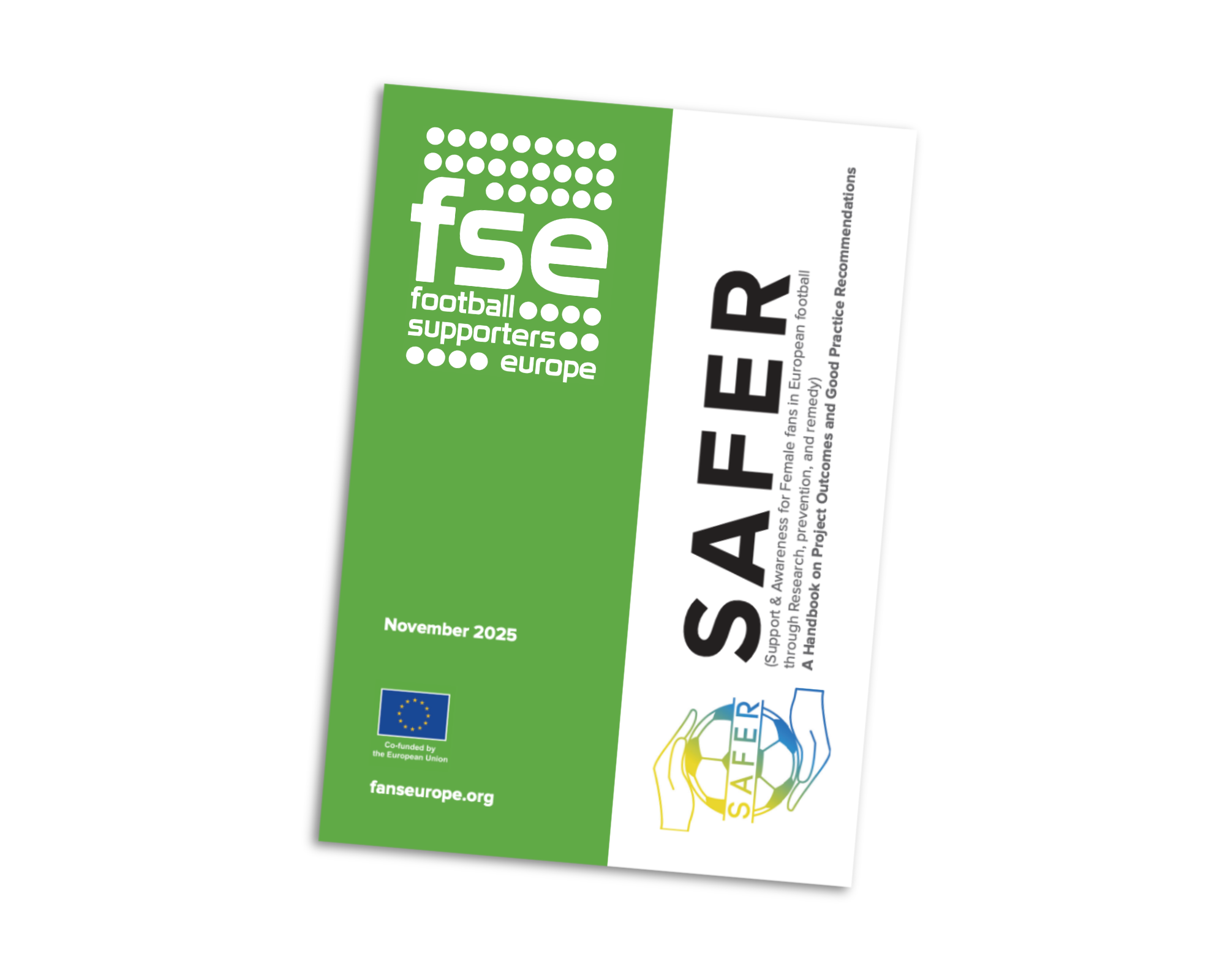
SAFER Handbook: Football Supporters Europe publishes project outcomes and good practices

SAFER Handbook: Football Supporters Europe publishes project outcomes and good practices

SAFER – Support & Awareness for Female fans in European football through Research, prevention, and remedy Football Supporters Europe is delighted to share the handbook from its SAFER (Support & Awareness for Female fans in European football through Research, prevention, and remedy) project. Download the SAFER handbook here. About the project SAFER, a Football Supporters Europe project supported by the […]

READ MORE

“This may be the most important story you will tell, and you want it done right”

“This may be the most important story you will tell, and you want it done right”

Workshop Recap: Media Training for Impacted Athletes: Sharing your story with journalists On September 24th, The Athletes Network for Safer Sports held its third workshop of the year focusing on “Media Training for Impacted Athletes.” Featuring top sports journalists with extensive experience covering abuse cases, Shireen Ahmed and Suzy Wrack, the session marked an important […]

READ MORE

Debunking the IOC FAQ

Debunking the IOC FAQ

In connection to the IOC Policy on the Protection of the Female (Women’s) Category in Olympic Sport A scientific, legal, and child safeguarding analysis from Humans of Sport May 2026 Introduction On 26 March 2026, the International Olympic Committee (IOC) Executive Board adopted a new Policy on the Protection of the Female (Women’s) Category in […]

READ MORE

Join the Network

Sport has the potential to be a catalyst for human development, unity, and freedom, but too often it instead brings harm to its athletes, fans, and communities. We exist to uncover and rectify the many abuses that exist both in and around sport. We aim to transform sports into an authentic force for good.