

Qatar’s continuing failure to remedy abuses faced by migrant workers and adequately protect them from labour exploitation is tainting the legacy of the FIFA men’s World Cup one year on, Amnesty International said today.
A new briefing, A Legacy in Jeopardy, shows that progress towards improving workers’ rights has largely stalled since the tournament ended, while remedy and justice for hundreds of thousands of workers who suffered abuses linked to the tournament remain elusive. Limited headway in a few areas has been overshadowed by a lack of action to tackle a wide range of continuing abuses.
“Qatar’s continued failure to properly enforce or strengthen its pre-World Cup labour reforms puts any potential legacy for workers in serious peril. The government must urgently renew its commitment to protecting workers, while both FIFA and Qatar should agree to remediation plans for all those who suffered,” said Steve Cockburn, Amnesty International’s Head of Economic Social Justice.
“From illegal recruitment fees to unpaid wages, hundreds of thousands of migrant workers lost their money, health and even their lives while FIFA and Qatar tried to deflect and deny responsibility. Today, a year on from the tournament too little has been done to right all these wrongs, but the workers who made the 2022 World Cup possible must not be forgotten.”
Reforms belatedly introduced and weakly enforced by the Qatari government, and FIFA’s introduction of a human right policy in 2017, failed to prevent widespread abuses occurring in the lead up to and during the tournament, and abuses continue today.
Steve Cockburn said: “The abuses related to the 2022 World Cup should serve to remind sporting bodies that human rights must always be at the heart of decisions when awarding events.”
Inadequate reform and enforcement
Qatar signed an agreement in 2017 with the International Labour Organization (ILO), resulting in significant changes to labour laws in the following years, including reforms of the Kafala sponsorship system, a new minimum wage, and health and safety legislation. However, at the onset of the World Cup the implementation and enforcement measures needed to prevent further widespread abuses occurring remained inadequate.
Since the tournament ended, progress has stalled further. Interviewees told researchers that most migrant workers can now leave the country freely, and noted advances in the enforcement of laws related to working in heat, notably a ban on outdoor construction work in the hottest parts of the day. But beyond this, they painted a bleak picture of lost momentum and continued exploitation.
Workers are supposed to be able to freely move jobs to escape abuse or seek better conditions, but while they no longer legally require a ‘no-objection certificate’ (NOC) from employers, in practice many must still secure some form of permission. Workers told Amnesty International that even government officials continue to suggest they should get such permission in order to facilitate job transfers, and permissions are often a stated requirement in job adverts.The government’s own data shows that while more than 150,000 people changed jobs in the first eight months of the year, it also rejected a third of workers’ applications to transfer in the same period.
“Changing jobs is still a problem, workers can’t change without the NOC, it is impossible to change without it. It is like a silent requirement. New employers still require NOCs mostly, and old companies don’t want to give it,” a diplomat from a workers’ origin country told researchers.
Additionally, employers still effectively control workers’ presence in the country, jeopardizing their legal status and preventing them from changing employer. For instance, in response to workers filing complaints or requesting to change jobs, abusive employers still cancel workers’ residence permits, or falsely report employees as having “absconded” from their jobs, which can lead to workers being arrested and deported. One representative of a foreign embassy in Doha told Amnesty International that “employers still have workers in a headlock”.
Wage theft remains the most frequent form of exploitation faced by migrant workers in Qatar, including amongst drivers in the growing food delivery industry, but the system to detect and respond to delayed and unpaid salaries and benefits is still not fit for purpose. Wages also remain low, and there has been no increase to the minimum wage since its introduction in 2021 even though living costs have risen.
Despite the establishment of specialist Labour Committees in Qatar, of which there are now five, huge barriers remain for workers trying to access remedy through the justice system. It is still a lengthy and challenging process for migrant workers, who must effectively stay in the country to argue their cases. As a result, workers often have no option but to accept settlements of far less than they are entitled to, and abusive employers are rarely held fully to account.
Migrant workers employed as domestic staff, most of whom are women, remain especially vulnerable to serious abuses, and the government has done little in the last year to protect these workers better or to bring perpetrators of abuse to justice. This week the ILO published a progress report on reforms in Qatar highlighting continued areas of cooperation, as well as “significant challenges that remain”.
Remedies and restitution
While the labour abuses endured by migrant workers since FIFA awarded Qatar the right to host the World Cup cannot be undone, they can and must be remedied.
FIFA generated a record US$7.5 billion from the Qatar World Cup but details of a tournament Legacy Fund it promised remain vague. In March FIFA announced the launch of a review into the actions it needed to take to ensure remedy in line with its human rights policies. It is expected to be published in the near future. To meet their respective human rights obligations and responsibilities, Qatar and FIFA must act urgently to ensure victims’ right to remedy and compensation are not denied or delayed any further.
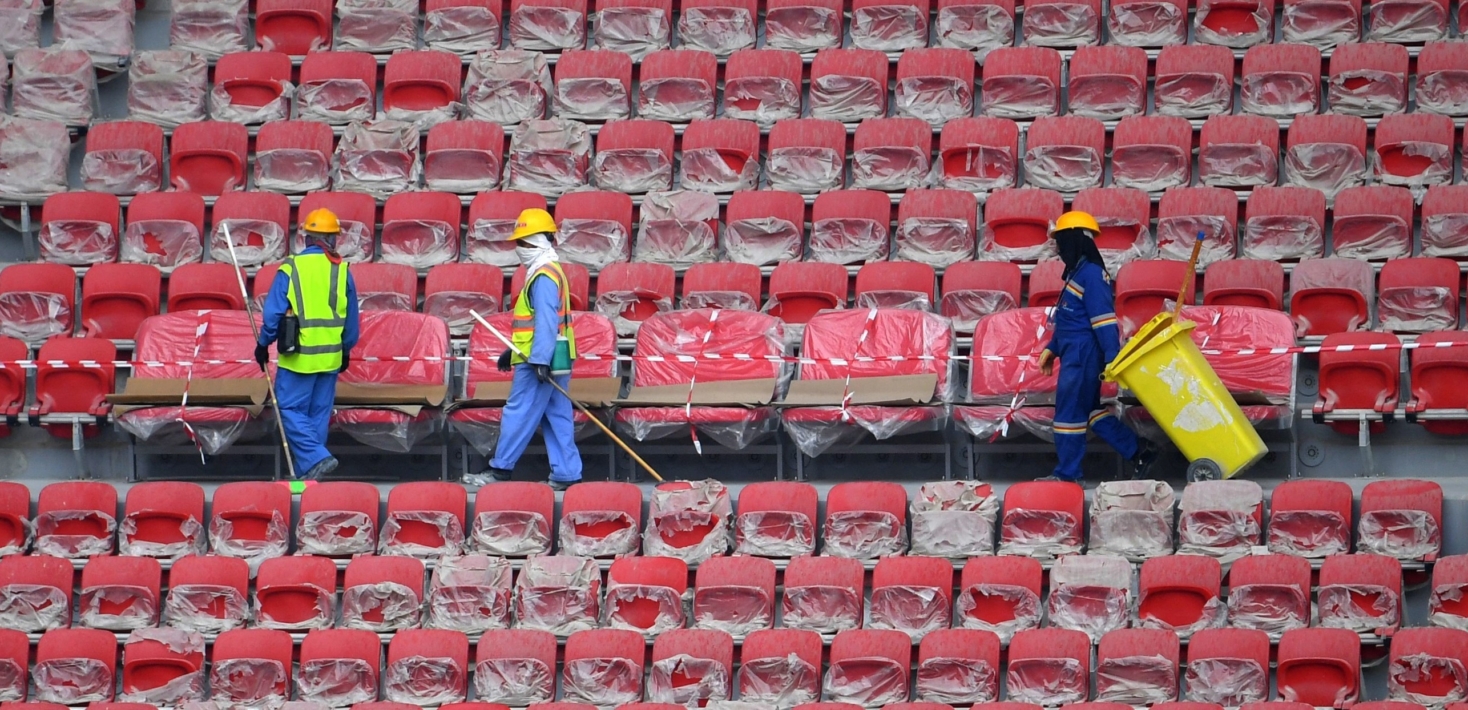
As previously documented by Amnesty International, hundreds of migrant security guards and marshals deployed to tournament-related sites and employed on short term contracts were subject to labour exploitation during the 2022 Qatar World Cup. This included workers paying unlawful recruitment fees, being misled about their jobs, and having to work excessive hours without weekly days off. Almost a year later they are yet to receive any remedy.
Marcus, 33, from Ghana, who works to support his siblings and paid nearly US$400 in recruitment costs, told Amnesty International:
“I had to take out a loan to pay for the expenses to travel to work in Qatar during the World Cup. I am still paying it, what I earned was not enough.”
The briefing reiterates a 10-point plan for reform produced by Amnesty International in November 2022 which urges Qatar to improve and better enforce its labour laws to protect workers from further exploitation and ensure access to justice and reparation for all victims.
Steve Cockburn said: “Qatar should not be under the illusion that just because the tournament is over its actions won’t face scrutiny and it must renew efforts to improve workers’ rights. As for FIFA, to prevent a repeat of the kind of abuses associated with the World Cup in Qatar, it must learn from its mistakes, be prepared to take its human rights responsibilities seriously, and directly remedy abuses that its failures caused or contributed to.”