

Discrimination, Ill-Treatment in Detention, Privacy Violations, Conversion Practices
(Beirut) – Qatar Preventive Security Department forces have arbitrarily arrested lesbian, gay, bisexual, and transgender (LGBT) people and subjected them to ill-treatment in detention, Human Rights Watch said today. LGBT people interviewed said that their mistreatment took place as recently as September 2022, as Qatar prepared to host the 2022 FIFA Men’s World Cup in November and even as the government came under intense scrutiny for its treatment of LGBT people.
Human Rights Watch documented six cases of severe and repeated beatings and five cases of sexual harassment in police custody between 2019 and 2022. Security forces arrested people in public places based solely on their gender expression and unlawfully searched their phones. As a requirement for their release, security forces mandated that transgender women detainees attend conversion therapy sessions at a government-sponsored “behavioral healthcare” center.
“While Qatar prepares to host the World Cup, security forces are detaining and abusing LGBT people simply for who they are, apparently confident that the security force abuses will go unreported and unchecked,” said Rasha Younes, LGBT rights researcher at Human Rights Watch. “Qatari authorities need to end impunity for violence against LGBT people. The world is watching.”
Human Rights Watch interviewed six LGBT Qataris, including four transgender women, one bisexual woman, and one gay man. Doctor Nasser Mohamed, an openly gay Qatari activist, helped connect Human Rights Watch to five of those interviewed.
All said that Preventive Security Department officers detained them in an underground prison in Al Dafneh, Doha, where they verbally harassed and subjected detainees to physical abuse, ranging from slapping to kicking and punching until they bled. One woman said she lost consciousness. Security officers also inflicted verbal abuse, extracted forced confessions, and denied detainees access to legal counsel, family, and medical care. All six said that police forced them to sign pledges indicating that they would “cease immoral activity.”
All were detained without charge, in one case for two months in solitary confinement, without access to legal counsel. None received any record of having been detained. These acts could constitute arbitrary detention under international human rights law.
The Preventive Security Department is under Qatar’s Interior Ministry.
A transgender Qatari woman said that after security forces arrested her on the street in Doha, Preventive Security officers accused her of “imitating women” because of her gender expression. In the police car, they beat her until her lips and nose were bleeding and kicked her in the stomach, she said. “You gays are immoral, so we will be the same to you,” she said one officer told her.
“I saw many other LGBT people detained there: two Moroccan lesbians, four Filipino gay men, and one Nepalese gay man,” she said. “I was detained for three weeks without charge, and officers repeatedly sexually harassed me. Part of the release requirement was attending sessions with a psychologist who ‘would make me a man again.’”
Another Qatari transgender woman said she was arrested in public by Preventive Security Department forces because she was wearing makeup. “They gave me hand wipes and made me wipe the makeup off my face,” she said. “They used the makeup-stained wipes as evidence against me and took a picture of me with the wipes in my hand. They also shaved my hair.” Security forces made her sign a pledge that she would not wear makeup again as a condition for her release, she said.
A Qatari bisexual woman said: “[Preventive Security officers] beat me until I lost consciousness several times. An officer took me blindfolded by car to another place that felt like a private home from the inside and forced me to watch restrained people getting beaten as an intimidation tactic.”
A Qatari transgender woman, arrested by Preventive Security in public in Doha, said: “They [Preventive Security] are a mafia. They detained me twice, once for two months in a solitary cell underground, and once for six weeks. They beat me every day and shaved my hair. They also made me take off my shirt and took a picture of my breasts. I suffered from depression because of my detention. I still have nightmares to this day, and I’m terrified of being in public.”
In all cases, LGBT detainees said, Preventive Security forces forced them to unlock their phones and took screenshots of private pictures and chats from their devices, as well as contact information of other LGBT people.
A Qatari gay man who has experienced government repression, including arbitrary arrest, said that security forces surveilled and arrested him based on his online activity.
All those interviewed provided strikingly similar accounts. The repressive climate around free expression in Qatar, including around the rights of LGBT people, has made many people who may have experienced mistreatment afraid to be interviewed because of the risk of retaliation, Human Rights Watch said.
Qatar’s Penal Code, under article 285, punishes extramarital sex, including same-sex relations, with up to seven years in prison. None of those interviewed said they faced charges, and it appears their arbitrary arrest and detention is based on Law No 17 of 2002 on Protection of Community, which allows for provisional detention without charge or trial for up to six months, if “there exist well-founded reasons to believe that the defendant may have committed a crime,” including “violating public morality.” Qatari authorities also censor mainstream media reports about sexual orientation and gender identity.
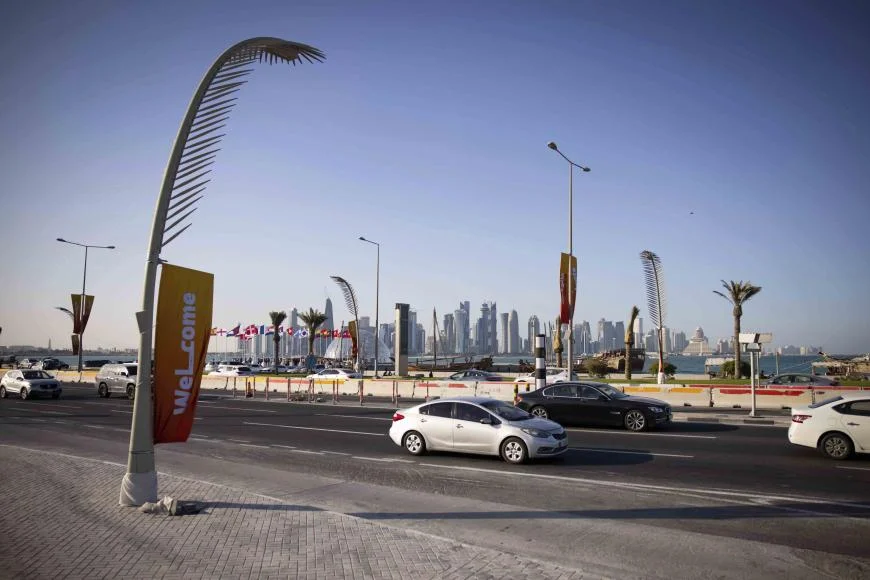
In 2020, Qatar assured prospective visitors that it would welcome LGBT visitors and that fans would be free to fly the rainbow flag at the World Cup football games. Suggestions by officials that Qatar would make an exception to its abusive laws and practices for outsiders are implicit reminders that Qatari authorities do not believe that its LGBT citizens and residents deserve basic rights, Human Rights Watch said.
FIFA, the football governing body, which awarded Qatar the World Cup in 2010, adopted in 2016 the United Nations Guiding Principles on Business and Human Rights, which require it to “avoid infringing on the human rights of others and address adverse human rights impacts.” It requires FIFA to take adequate measures for the “prevention, mitigation, and remediation” of human rights impacts.
Qatari security forces should end arrests for adult, consensual sexual relations, including same-sex conduct, or those based on gender expression, and immediately release LGBT people who remain arbitrarily detained, Human Rights Watch said. The Qatari government should put an end to security force ill-treatment against LGBT people, including by halting any government-sponsored programs aimed at conversion practices. Countries sending external security forces to Qatar during the World Cup should ensure they comply with international human rights law and refrain from adding to Qatari security forces’ abuses.
The Qatari authorities should repeal article 285 and all other laws that criminalize consensual sexual relations outside of marriage and introduce legislation that protects against discrimination on the basis of sexual orientation and gender identity, online and offline. Freedom of expression and nondiscrimination based on sexual orientation and gender identity should be guaranteed, permanently, for all residents of Qatar, not just spectators going to Qatar for the World Cup, Human Rights Watch said.
“Only weeks ahead of the World Cup, LGBT people are raising the alarm on the abuses they have endured by security forces,” Younes said. “The Qatari government should call an immediate halt to this abuse and FIFA should push the Qatari government to ensure long-term reform that protects LGBT people from discrimination and violence.”