Olympic Committee’s Rights Commitments Tested in India

The International Olympic Committee (IOC) is holding its 140th annual session from October 15 to 17 in Mumbai, India, where the government is expected to announce its bid to host the 2036 Summer Olympic Games in the western state of Gujarat.

India has never hosted the Olympics and the government of Prime Minister Narendra Modi believes that now is the “right time.”

Yet poor human rights conditions, including attacks on media freedom and lack of protections for Indian athletes, is a concern and potential barrier to hosting the prestigious global games in India. For nearly a decade, Modi and his Hindu nationalist Bharatiya Janata Party (BJP) have adopted abusive laws and policies that systematically discriminate against religious minorities, particularly Muslims, and stigmatize opposition voices by targeting activists, protesters, and journalists with intimidation, threats, and politically motivated criminal cases.

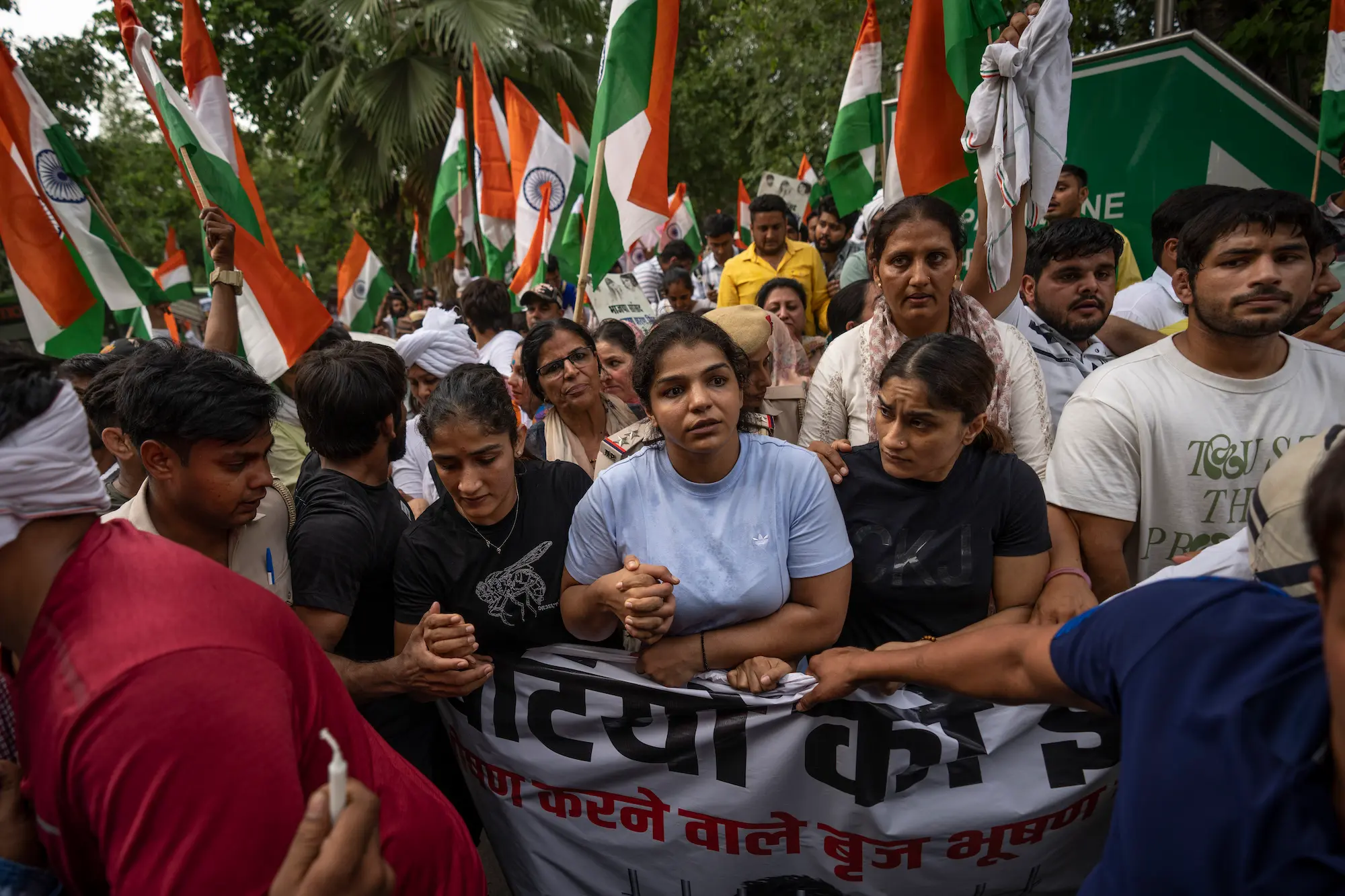
In May, the Sport & Rights Alliance and the IOC itself condemned Indian authorities’ treatment of female athletes during a protest in Delhi against outgoing Wrestling Federation of India president and BJP member of parliament Brij Bhushan Singh. Security forces tackled and forcibly detained women wrestlers, including Olympic medallists, as they demanded justice and safety for female athletes who filed police complaints of sexual abuse spanning a decade against Singh. Initially, the authorities appeared to shield Singh, but an investigation into the complaints is now ongoing.

Hosting mega-sporting events has increasingly served as a veneer for governments to “sportswash” their poor rights records. Such events should instead accelerate reforms and protections of human rights.

The IOC has adopted a human rights framework in accordance with the United Nations Guiding Principles on Business and Human Rights. In Mumbai, the IOC Executive Board will propose amendments to the Olympic Charter to “better articulate” their commitment to stamping out all forms of discrimination in the Olympic Movement.

With the Modi government’s Olympics bid, the IOC has a key opportunity to press for human rights reforms and justice for affected Indian athletes. If governments want the prestige that goes along with hosting sports’ biggest event, the IOC needs to ensure that all future hosts do human rights due diligence and remedy rights abuses in their country, including stopping the abuse of athletes and the targeting of journalists.
Related news

FIFA’s Ticketing Policy is Excluding Fans With Disabilities From the 2026 World Cup

FIFA’s Ticketing Policy is Excluding Fans With Disabilities From the 2026 World Cup

On 15 December, Football Supporters Europe (FSE) and its Disability & Inclusion Fan Network wrote to FIFA President Gianni Infantino to condemn FIFA’s accessible ticket pricing for the 2026 World Cup, which is effectively excluding supporters with disabilities from the tournament. FIFA has restricted accessibility tickets for National Team fans (PMA allocation) to Categories 1–3, […]

READ MORE

SAFER Handbook: Football Supporters Europe publishes project outcomes and good practices

SAFER Handbook: Football Supporters Europe publishes project outcomes and good practices

SAFER – Support & Awareness for Female fans in European football through Research, prevention, and remedy Football Supporters Europe is delighted to share the handbook from its SAFER (Support & Awareness for Female fans in European football through Research, prevention, and remedy) project. Download the SAFER handbook here. About the project SAFER, a Football Supporters Europe project supported by the […]

READ MORE

Related resources

Survey: Help Shape UNESCO’s Global Safe Sport Policy Standards

Survey: Help Shape UNESCO’s Global Safe Sport Policy Standards

Take the Survey to Help Guide Safe Sport Policies Across the Globe **This survey is now closed.** In collaboration with UNESCO’s Sport Section, the Sport & Rights Alliance is conducting a survey to gather the perspectives of impacted people on UNESCO’s Global Policy Standards for Inclusive, Equitable and Safe Sport and Physical Education. The purpose […]

READ MORE

“It’s often still dangerous for athletes to speak out.”

“It’s often still dangerous for athletes to speak out.”

Workshop Recap: Athletes as Human Rights Defenders The Athletes Network for Safer Sports held a workshop on June 27th on the topic of “Athletes as Human Rights Defenders.” Moderated by Network Coordinator Joanna Maranhão, the session explored what athletes face when they speak up for human rights and what practical measures should be put in […]

READ MORE

Join the Network

Sport has the potential to be a catalyst for human development, unity, and freedom, but too often it instead brings harm to its athletes, fans, and communities. We exist to uncover and rectify the many abuses that exist both in and around sport. We aim to transform sports into an authentic force for good.