

Locked in, left out: the hidden lives of Kenyan domestic workers in Saudi Arabia
Kenyan women hired as domestic workers in Saudi Arabia endure gruelling, abusive and discriminatory working conditions, which often amount to forced labour and human trafficking, Amnesty International said in a new report. The report highlights how employers subjected the women to extreme exploitation in private homes, often fuelled by racism, and how domestic workers continue to be excluded from Saudi Arabia’s labour law and other limited reforms.
Locked in, left out: the hidden lives of Kenyan domestic workers in Saudi Arabia, documents the experience of more than 70 women who previously worked in Saudi Arabia. Often deceived by recruiters in Kenya about the nature of their jobs, once in Saudi Arabia they were made to work under brutal conditions, regularly toiling for more than16 hours, being denied days off and prevented from ever leaving the house. The women also faced awful living conditions and inhumane treatment including sexual, verbal and physical assault. Employers typically confiscated their passports and phones and sometimes withheld their wages.
“These women travelled to Saudi Arabia in search of work to support their families but instead endured unspeakable abuse in the homes of their employers,” said Irungu Houghton, Executive Director of Amnesty International Kenya. “The Kenyan government is actively encouraging labour migration, and the Saudi Arabian authorities claim that they have introduced labour rights reforms, yet behind closed doors domestic workers continue to face shocking levels of racism, abuse and exploitation.”
“These women travelled to Saudi Arabia in search of work to support their families but instead endured unspeakable abuse in the homes of their employers” Irungu Houghton, Executive Director, Amnesty International, Kenya
“The Saudi and Kenyan authorities must listen to these women; whose labour sustains families and contributes significantly to the economic development of both countries. The Saudi authorities should urgently grant domestic workers equal protection under the labour law, introduce an effective inspection system to tackle widespread abuses in private homes, and fully dismantle the Kafala sponsorship system that binds foreign workers to employers, fosters exploitation and perpetuates systemic racism.”
Neither the Saudi nor the Kenyan authorities responded to Amnesty’s request for comment or information.
“The Saudi authorities should urgently grant domestic workers equal protection under the labour law, introduce an effective inspection system to tackle widespread abuses in private homes, and fully dismantle the Kafala sponsorship system that binds foreign workers to employers, fosters exploitation and perpetuates systemic racism.” Irungu Houghton
“This made me feel like it’s a prison”
Rashida*, a former domestic worker, said:
“She [the employer] didn’t think that I could get tired. There was no chance to rest… I would work for her the whole day and then even at night, I would still be working. I felt like a donkey and even donkeys find rest.”
“I would work for her the whole day and then even at night, I would still be working. I felt like a donkey and even donkeys find rest.” Rashida*
All the women said they faced severe restrictions on their freedom and privacy; the confiscation of their phones cut them off from the outside world, leading to severe isolation and denying them contact with their families.
Joy* told of how she felt trapped during her time in Saudi Arabia.
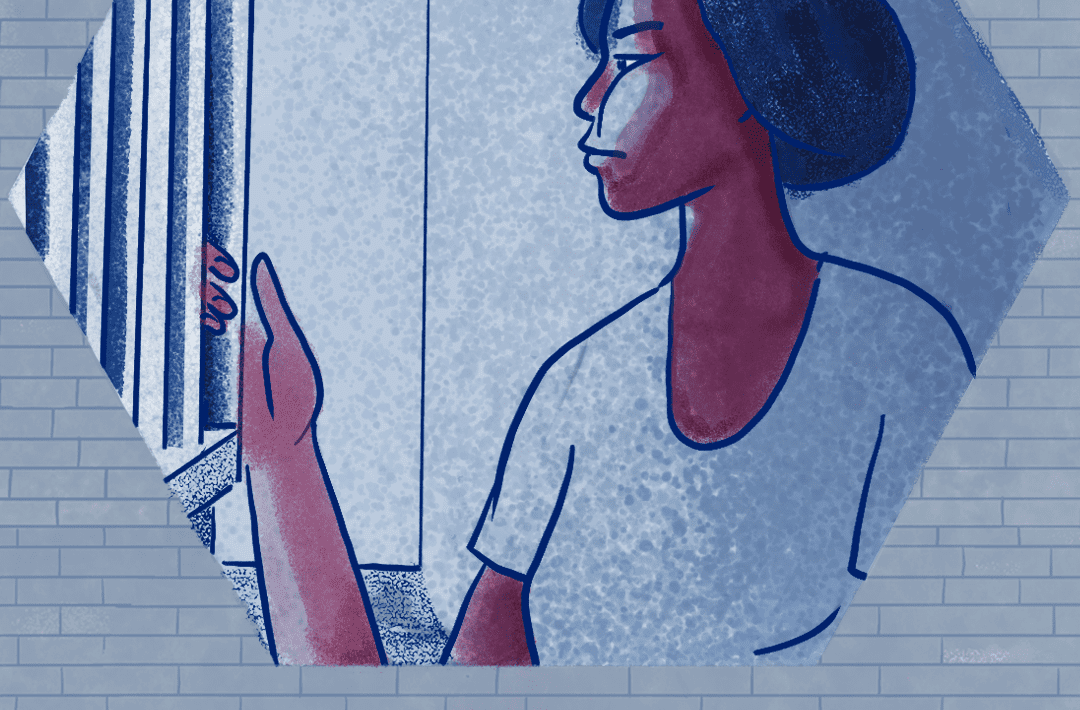
“I have no freedoms, because once you are inside you never go out. You don’t go out and do not see out. This made me feel like it’s a prison,” she said.
Eve*, added how this isolation was used to deter her from complaining about her conditions.
“The first thing my boss did was to take my passport. If you ask, they will tell you ‘I have paid for everything for you,’…and you will not dare to say anything because you are in a foreign country.”
“I have no freedoms, because once you are inside you never go out. You don’t go out and do not see out. This made me feel like it’s a prison.” Joy*
Despite the excessive workload, almost all the women said that their employers deprived them of food or gave them only leftovers, leaving some to survive on bread, or dried instant noodles. Katherine* said that “food was the main problem” and she “survived on biscuits”, with her employer only giving her leftovers, rotten food or sometimes providing nothing at all, and even throwing food that Katherine cooked for herself in the bin.
Most women also described being provided with wholly inadequate living conditions, often made to sleep in a store cupboard, or on the floor of a child’s bedroom, and without a proper bed, bedding or working air conditioning.
“The husband said ‘you will do what I want’”
Many of the women recounted how they were shouted at, called names and humiliated, while others were sexually assaulted, and in some cases raped, by their male employers. This included Judy, a single mother of two who had come to Saudi Arabia to escape her abusive husband.
“He did rape me and even threatened me not to tell the wife. I kept quiet. It was like his daily routine… I tried [to tell him stop] but men are very strong. So eventually he did rape me, five times…”
While many were too afraid to report the abuse to the Saudi authorities or the Kenyan embassy, those who did ended up facing retaliation or trumped up charges, like being falsely accused of theft, and losing their wages.
“They called us monkeys or baboons”
The report also highlights how systemic racism embedded in the kafala sponsorship system, coupled with entrenched discriminatory attitudes rooted in the legacies of slavery and British colonialism in the region, perpetuated the exploitation, abuse and racial discrimination of these workers, particularly women, whose gendered vulnerabilities are often compounded by their status as migrant domestic workers.
“Because of my dark complexion, I was always called a Black animal. The children would also come to my face to point and laugh, saying how I am a monkey.” Niah*
Many of the women described their employers calling them highly derogatory and racist names, including “hayawana” (animal), “khaddama” (servant) and “sharmouta” (prostitute). Employers would also talk disparagingly about their skin colour, comment on their body odour or prevent them from using the same cutlery or homeware as the family – something the women often referred to as being ‘segregated’ – because they were from Africa.
Niah* said: “Because of my dark complexion, I was always called a Black animal. The children would also come to my face to point and laugh, saying how I am a monkey.”
Irungu Houghton said: “At the heart of the abuse lies a labour system underpinned by historical and structural racism, where racialized migrant domestic workers – including Black African women – are dehumanized and treated as disposable.”
Insufficient laws and reforms
In recent years, as part of its ‘Vision 2030’ programme, Saudi Arabia has introduced limited reforms to the kafala sponsorship system that binds the country’s 13 million migrant workers to their employers and directly enables forced labour and other serious human rights abuses.
“Kenya has a big role to play in the protection of domestic workers abroad. It must work with Saudi Arabia to ensure the protection of migrant workers.” Irungu Houghton
However, even these limited reforms have been largely restricted to workers covered by Saudi Arabia’s labour law, which continues to exclude domestic workers. Today, domestic workers remain subject to tight restrictions on their freedom of movement, in most cases still requiring their employer’s permission to change jobs or leave the country.
In 2023, updated Regulations for Domestic Workers were introduced by the government to better regulate working hours and conditions. Yet without an effective monitoring, inspection and enforcement regime, these regulations are often meaningless in practice. Many of the abuses documented are illegal under Saudi law yet were perpetrated with total impunity.
“Kenya has a big role to play in the protection of domestic workers abroad. It must work with Saudi Arabia to ensure the protection of migrant workers by better regulating recruitment practices and ensuring embassies are equipped to urgently support domestic workers in distress, including providing safe houses as well as financial and legal support for those in need,” said Irungu Houghton.
*Names have been changed
Background
Around 4 million people work as domestic workers in Saudi Arabia, all of whom are foreign nationals according to the country’s labour market statistics, including 150,000 Kenyans. Due to soaring unemployment in Kenya, officials have been encouraging young people to seek jobs in Gulf countries including Saudi Arabia, which is one of Kenya’s top sources of remittances.