

1-year countdown marks need for urgent action in women and children’s football
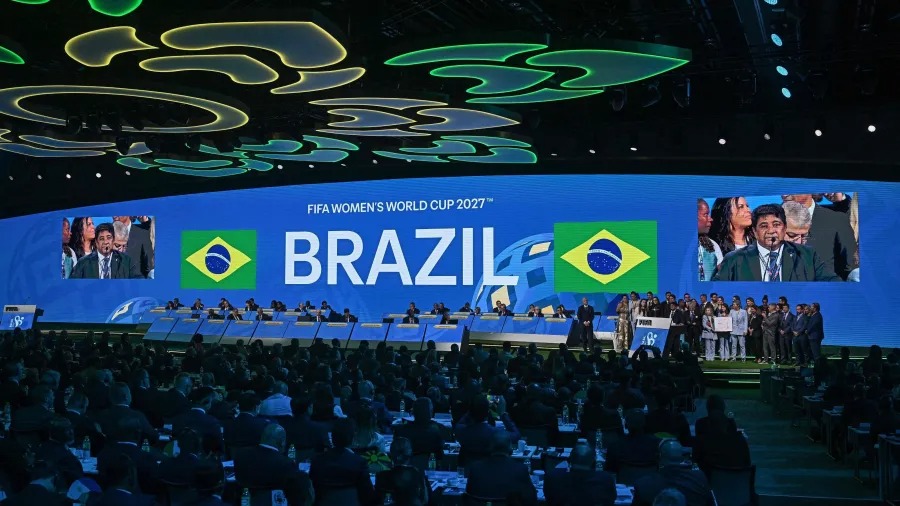
(São Paulo, June 23, 2026) – With just one year until the kickoff of the 2027 Women’s World Cup, the Brazilian government, national football authorities and FIFA should prioritize the rights and wellbeing of women and children in football, the Sport & Rights Alliance (SRA) said today. As the first South American nation to host the tournament, Brazil faces a historic opportunity to move beyond the problematic legacy of past mega sporting events hosted in the country.
“While previous events like the 2014 Men’s World Cup and 2016 Olympics focused on building massive infrastructure at the expense of local communities, the 2027 Women’s World Cup presents an opportunity to focus on building protections for the people within the game,” said Andrea Florence, executive director of the Sport & Rights Alliance. “This would be an especially powerful legacy in a country where women were not only prohibited by law from playing football for four decades, but subjected to rampant discrimination, abuse and inequality in the years since.”
The prevalence of violence within this historically unequal environment is corroborated by a recent quantitative study published last year in the Journal of Interpersonal Violence. The study, which surveyed 857 elite athletes in Brazil, revealed that 93% of participants reported experiencing at least one form of interpersonal violence.
“Brazil’s history of exclusion and systemic imbalance means that any perceived progress or gender equity agenda, especially in sports, should be interpreted with caution,” said Silvana Goellner, director of the Center for Sports Memory at Federal University of Rio Grande do Sul (UFRGS). “Historically, media coverage – from recreational grassroots to elite sport – has never been truly balanced when comparing women’s and men’s access to sport.”
Specifically, 91% of the athletes reported incidents of psychological violence, 63% reported sexual violence and 55% reported physical violence. The findings revealed that women and girls are proportionally more vulnerable to psychological and sexual violence; athletes in team sports are more prone to physical violence; and those with professional contracts or athletic scholarships are more susceptible to psychological abuse.
“We are asking the Brazilian government to create a national safe sport entity to investigate abuse, implement stronger oversight of its regional and national sports federations, including football academies, and improve working conditions for women players,” said Joanna Maranhão, network coordinator at the Sport & Rights Alliance. “This is the moment to transform the entire system so that the players of our country’s most popular sport can thrive.”
This pervasive violence begins long before athletes reach the professional stage. Brazil’s football academies, which recruit and house children as young as 10 years old, often operate with little to no accountability. The lack of oversight in these spaces has led to systemic failures and harm, such as the 2019 Ninho do Urubu fire at the Flamengo training center, which caused the deaths of 10 child athletes.
“Children should be able to chase their dreams of playing football without facing abuse and neglect,” said Minky Worden, director of global initiatives at Human Rights Watch. “The Brazilian governments should ensure football academies – where children leave behind their families and support systems for the chance to become professional footballers – are not high-risk zones for exploitation, but safe spaces for athletes to play and develop.”
At the professional level, many women’s teams in Brazil continue to face shockingly poor training environments, pay and support compared to the men’s game. Recent reports on Flamengo, Corinthians and Avaí Kindermann have exposed months of unpaid salaries, reduced budgets and lack of basic equipment and facilities (including clean water) for the women’s teams.
“Brazilian women footballers are among the best in the world, and their basic rights to decent work and fair wages must be respected and protected,” said Paola Cammilli, global director of campaigns at Building and Wood Workers’ International (BWI). “The 2027 Women’s World Cup must be a catalyst for addressing poor working conditions for women in male-dominated sectors. From the football clubs to stadium construction to global supply chains, violence and harassment are systemic. Making all of these environments safe from harassment, abuse and labour exploitation – and recognising the rights and agency of all workers – are essential to delivering safe, inclusive, and rights-respecting sport.”
As the spotlight on Brazilian football grows, women journalists are being increasingly targeted by orchestrated online harassment and physical threats. Reporters, such as Ana Thaís, Renata Mendonça and Renata Silveira and others, have faced severe attacks for reporting on cases of gender-based violence and discrimination, highlighting the urgent need for authorities to protect journalists, who are simply doing their jobs and reporting on the reality of the game.
“We are seeing an alarming trend of gender-based harassment of women journalists in all spaces, including sports,” said Artur Romeu, director of the Reporters Without Borders (RSF) Latin America bureau. “With such high levels of aggression against journalists exposing human rights issues in Brazilian sport, it is clear that the 2027 World Cup cannot succeed without a safe environment for the press. Robust protections to prevent, monitor and respond to these attacks and ensure that journalists are able to do their jobs without fear of retaliation or abuse are crucial.”
Having recently announced an important plan to tackle racism in sport, the Brazilian government should expand this momentum to address other systemic issues in women’s and children’s football as well. The 2027 World Cup should serve as the definitive turning point for football in Brazil to become a safe, equitable space for all – men, women, children and everyone who participates in ‘the beautiful game’.
“The FIFA Women’s World Cup 2027 is an opportunity for FIFA, the organizers, and public authorities to show that integrity, transparency, and accountability are more than aspirations,” said Tor Dølvik, Special Adviser at Transparency International Norway, on behalf of the global anti-corruption movement. “Preventing corruption and abuse of power must be demonstrated through concrete actions before, during, and after the tournament,”