

Assessing Human Rights Impacts of the 2026 FIFA Men’s World Cup
(New York, July 16, 2026) – The joy and celebration on display at the 2026 FIFA Men’s World Cup should not distract from the unprecedented exclusion, discrimination and misuse of power the U.S. government is conducting away from the spotlight, the Sport & Rights Alliance said today.
“Players, fans and communities at the 2026 World Cup have created countless moments of undeniable joy, inspiration, and unity,” said Minky Worden, director of global initiatives at Human Rights Watch. “But beyond these heartwarming stories, this World Cup has been played against a backdrop of the U.S. government’s abusive immigration crackdown and a failure by FIFA to uphold its own human rights standards.”
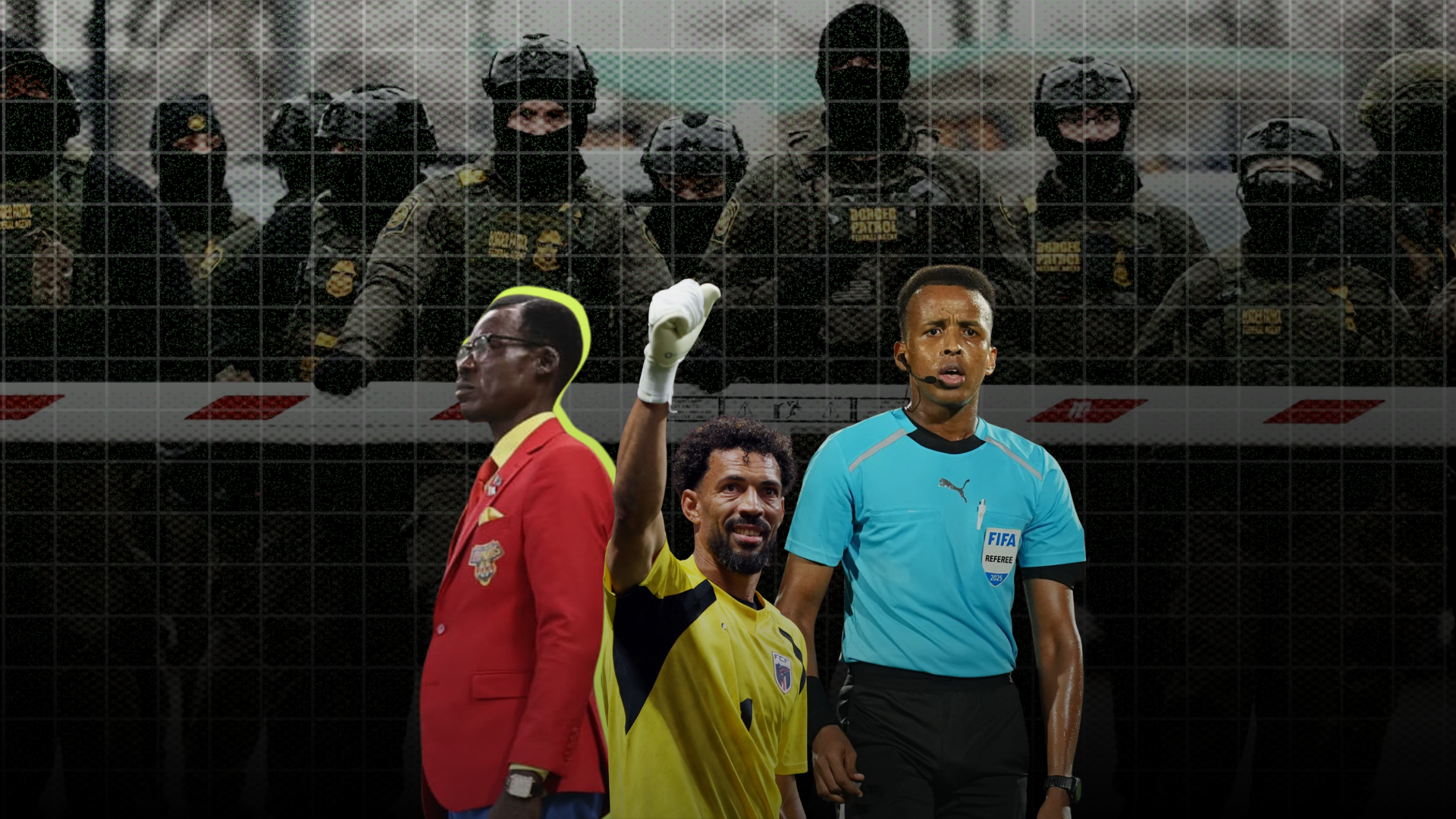
Despite FIFA’s promise of the “most inclusive” World Cup in history, the U.S. government’s stringent and at times discriminatory visa policies complicated player travel and shut out countless fans, workers, and families – as seen in the high-profile cases of Somali referee Omar Artan, the mother of Cabo Verde’s goalkeeper, and the Democratic Republic of Congo superfan ‘Lumumba Vea’, as well as in countless other cases that did not make headline news.
“From our monitoring efforts, we have gathered little to no evidence of ticketholders from Africa and Asia who actually obtained visas to come to the United States,” said Ronan Evain, executive director of Football Supporters Europe. “The diverse crowds were almost entirely composed of local diaspora communities or people with dual citizenship who did not need visas to attend, masking FIFA’s failures to ensure a World Cup that actually included the world.”
The Sport & Rights Alliance wrote to FIFA asking how many fans and journalists were able to facilitate access to priority visas via the FIFA PASS, but FIFA has yet to respond. The travel concerns extended to LGBTI communities and fans as well, many of whom decided not to travel to the tournament out of fear for their personal safety. This vulnerability was compounded by many host cities whose FIFA-mandated “human rights plans” glaringly failed to even mention protections or safety protocols for LGBTI+ people.
“Due to anti-trans immigration policies and rising anti-LGBTI rhetoric and policies across the U.S., countless queer football fans who dream of attending the World Cup had to make the painful decision to stay home,” said Lily Dong Li Rosengard, senior specialist on gender identity, gender expression, and sex characteristics at ILGA World. “FIFA promised a celebration of diversity and inclusion, but did very little to make this a reality.”
Press freedom watchdogs had to conduct extensive safety interventions for journalists navigating both the hostile domestic rhetoric and the complicated visa restrictions during their tournament coverage.
“Journalists faced a broad range of challenges to cover this World Cup due to an increasingly hostile environment for reporters, particularly in the U.S.,” said Gypsy Guillén Kaiser, Chief Global Affairs Officer at the Committee to Protect Journalists. “Ahead of the tournament, we conducted an extraordinary number of safety trainings for journalists who cover every aspect of the game. This cannot be the new norm for planning coverage. FIFA must guarantee press freedom, including country entry, which was a marked barrier this year.”
The 2026 Men’s World Cup also exposed a critical debate about players facing ongoing criminal trials or serious allegations of sexual violence. In 2025, the Sport & Rights Alliance released a report, “No one wants to talk about it,” which gathered the experiences and perspectives of people impacted by abuse in sport on this topic, revealing how a pattern of inaction and silence from sport governing bodies harms victims and survivors. While FIFA’s Safeguarding Code of Conduct highlights that players and officials must declare any investigation or conviction for a sexual or other violent offence, it is not known whether FIFA undertook any actions as a result.
“It’s time for FIFA to finally take the widespread problem of abuse in sport seriously,” said Andrea Florence, executive director of the Sport & Rights Alliance. “Survivors are calling on sports bodies to listen to impacted people, communicate transparently, and implement a clear, consistent policy that acknowledges the impact of giving a global platform to athletes accused of sexual offences.”
Violence and discrimination took place beyond the spotlight of the World Cup as well. U.S. Immigration and Customs Enforcement (ICE) carried out an unprecedented wave of raids across the country, detaining up to 10,000 people in just a five-day period and culminating in fatal shootings of immigrants by ICE officers in Houston, Texas, and Biddeford, Maine.
“As the world was captivated by the knockout stages, the U.S. government conducted a terrifying surge in militarized immigration enforcement far away from stadium lights that impacted tens of thousands of our neighbors,” said Daniel Noroña, Americas Advocacy Director, Amnesty International USA. “We cannot allow this pattern of systemic violence by a World Cup host country to be sportswashed and forgotten. Lorenzo Salgado Araujo and Johan Sebastian Guerrero should still be alive and their home countries of Mexico and Colombia should be celebrating the performance of their national teams rather than mourning the losses of their countrymen at the hands of ICE.”
This rights-abusing Trump administration has leveraged the World Cup for its political ends in a number of ways, including by promoting explicit anti-immigrant and xenophobic rhetoric alongside images of the U.S. Men’s National Team (USMNT) – many of whom are immigrants or the children of immigrants. President Trump’s intervention with the FIFA President in the case of USMNT’s Folarin Balogun was also one of the most controversial match-related moments of the tournament.
“FIFA and the Trump administration have weaponized the 2026 World Cup for political purposes, from Trump’s receipt of the FIFA Peace Prize, to anti-immigration social media posts by the Department of Homeland Security, and the president’s political intervention to ask to overturn a U.S. player’s red card,” said Jules Boykoff, author of Red Card: The 2026 World Cup, Sportswashing, and the FIFA Greed Machine and professor at Pacific University. “The World Cup has shown us that sports are politics by other means.”
In the coming months, the Sport & Rights Alliance will release a report detailing these human rights issues, ranging from discriminatory visa denials to immigration crackdowns and celebration of players accused of sexual violence. With the Los Angeles Olympics around the corner in 2028, it is time for the world of sport to move from voluntary human rights “guidelines” to real accountability.