

Requesting clarification on the IOC Working Group on Women’s Category
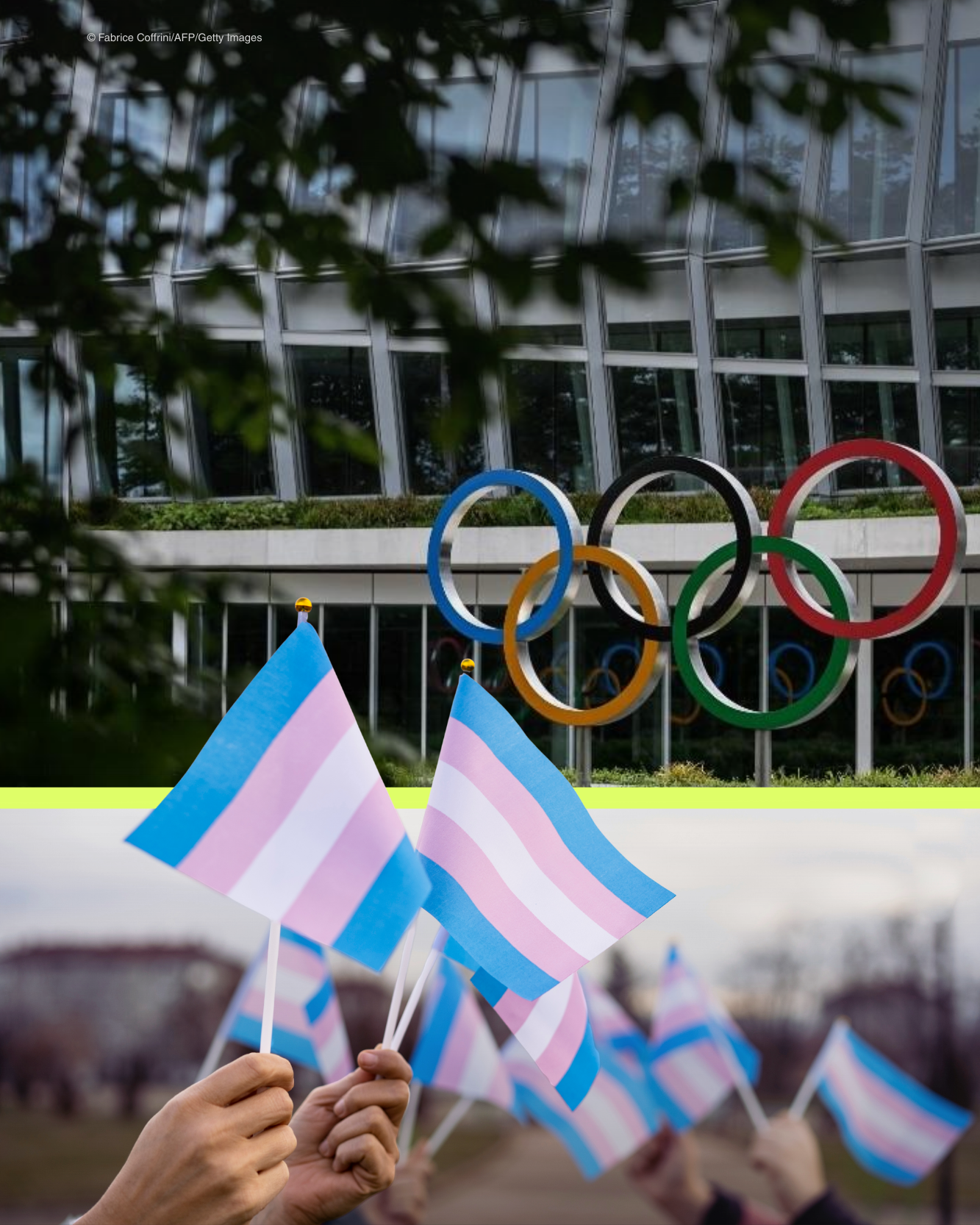
The Sport & Rights Alliance has written to the International Olympic Committee (IOC) regarding the IOC Working Group on the “protection of the female category” and potential decisions to implement mandatory sex testing and a blanket ban on transgender and intersex athletes in the women’s category.
Read the full letter below.
***
January 22, 2026
Mrs. Kirsty Coventry,
President
International Olympic Committee
Château de Vidy, 1007, Lausanne, Switzerland
Re: Call to uphold human rights for all athletes at upcoming IOC Executive Board Meeting
Dear President Coventry,
We are the Sport & Rights Alliance (SRA), a global coalition of leading civil society organizations committed to promoting the rights and well-being of those most affected by sport and to bring about a world where sport is an authentic force for good. We are reaching out to you in advance of the upcoming International Olympic Committee (IOC) Executive Board Meeting from January 31 to February 2, 2026, in Milan, Italy to request clarification related to the IOC Working Group on the women’s category.
In September 2025, we raised concerns about the IOC’s decision to establish a Working Group on the “protection of the female category” without disclosing its membership or process. We highlighted the risks of this move to the rights of all women and girls at risk as it neglects transparent, consultative decision-making and opens the way for restoring practices that have long threatened women’s rights and protection.
Our concerns have been exacerbated by new reports that the Working Group is considering mandatory sex testing and a blanket ban on transgender and intersex athletes in the women’s category.
Any decision impacting sports participation should include genuine engagement with all affected athletes and take into account relevant studies with diverse viewpoints, in particular one financed by the IOC which proved that transwomen athletes actually face some competitive disadvantages. Many experts from the United Nations have also highlighted the human rights risks of intrusive, privacy-violating practices like sex testing, and emphasized that LGBTIQ+ athletes deserve special protections due to their increased likelihood of experiencing – not committing – violence and abuse. It is important to note that even genetic sex testing is highly problematic due to a lack of scientific justification, ethical defensibility, and operational viability, causing it to harm rather than help women’s sport.
While we acknowledge the need to uphold fair eligibility requirements for the women’s category, we also acknowledge the IOC’s obligations to protect women and girls in all their diversity from discrimination and violence. The IOC’s 2021 Framework on Fairness, Inclusion and Non-Discrimination on the Basis of Gender Identity and Sex Variations – which was developed over two years, with more than 250 athletes and stakeholders – manages both these obligations by promoting pathways to inclusion in elite sport for all athletes without discrimination, while also ‘defining disproportionate advantage in ways that preserve meaningful and fair competition.’
Finally, we are also concerned that the politicization and weaponization of trans inclusion in sport, taking place largely in Western countries, are having undue influence on the IOC’s decisions. With the upcoming Olympic and Paralympic Summer Games occurring in the United States in 2028, we urge the IOC to remain true to its commitments to global representation and internationally recognized human rights.
As we have written previously, we would greatly appreciate the chance to meet you and engage in constructive dialogue around our shared objectives and priorities, including on athletes’ rights to inclusion, non-discrimination, health, safety and well-being. Specifically, we would like to request clarification on the following questions:
- How can impacted athletes and civil society be assured of the legitimacy, integrity and diversity of the Working Group on the “protection of the female category” in both membership and approach?
- In case the Working Group includes members of International Federations that have already adopted policies excluding trans and intersex athletes, how have these conflicts of interest been managed?
- Which experts and studies were included in the ‘science-based review’ presented to the Working Group in November 2025?
- How is the Working Group using the IOC’s 2021 Fairness Framework, which was highly-respected for its comprehensive, transparent and multi-stakeholder approach, in its deliberations?
- What is the Working Group’s decision-making process and governance structure, and when will the public be notified of next steps?
- What actions are the IOC and this Working Group taking to ensure the rights, well-being and bodily autonomy of all women and girls – including trans, gender-diverse and intersex athletes – are protected and respected?
As the leader of global sport, we urge the IOC to emphasize sport’s significant role as an avenue to health, well-being, community and social cohesion for people all around the world – and to uphold human rights for all athletes. All people, regardless of their gender identity and sex characteristics, should be allowed to participate in sports safely and equitably. As this is an urgent matter with far-reaching implications for athletes at all levels of global sport, we request your immediate response as soon as possible.
Yours sincerely,
Andrea Florence
Executive Director
Sport & Rights Alliance