

Supplier Audits Lacked Transparency, Don’t Answer Key Questions
(New York) – The International Olympic Committee (IOC) did not conduct adequate human rights due diligence to address the risk that Olympic uniforms and other products for the Beijing Winter Games aren’t linked to grave rights violations in China’s Uyghur region, the Coalition to End Forced Labour in the Uyghur Region (EUFL) and Human Rights Watch said today. The Coalition brings together over 400 organizations from 40 countries and includes family members of those unjustly held in China’s brutal mass detention camps.
An IOC statement describing the due diligence it conducted on suppliers ahead of Beijing 2022 was released on January 19, 2022 – just over two weeks before the games began. It contained significant gaps, including inadequate transparency of audit results and lack of analysis of suppliers’ responsible sourcing practices. The IOC also did not explain how it assesses whether suppliers are complicit in human rights abuses across their broader business, including for non-IOC products. Human Rights Watch and the Coalition wrote to the IOC on January 31 to request additional information but have not received a reply.
“The International Olympic Committee has for the first time made public its human rights due diligence for its Beijing 2022 products,” said Minky Worden, director of global initiatives at Human Rights Watch. “While there is increased transparency, the IOC did not provide credible assurance that it isn’t sourcing products linked to forced labor and human rights abuses in the Uyghur region of China and elsewhere.”
Human rights due diligence is a critical part of the framework of the United Nations Guiding Principles on Business and Human Rights and is consistent with the IOC’s commitment to build a strategic framework on human rights.
Human rights groups including Human Rights Watch and the EUFL Coalition have been asking for months for the IOC to disclose the steps it takes to ensure that Olympics-branded merchandise does not include products made with forced labor. Researchers and rights groups have found significant evidence of forced labor in the Xinjiang (Uyghur region) cotton farming industry, which produces 85 percent of China’s and 20 percent of the world’s cotton. The Better Cotton Initiative (BCI), a cotton sustainability initiative, in October 2020 ended activities in the Uyghur region due to the risk of forced labor.
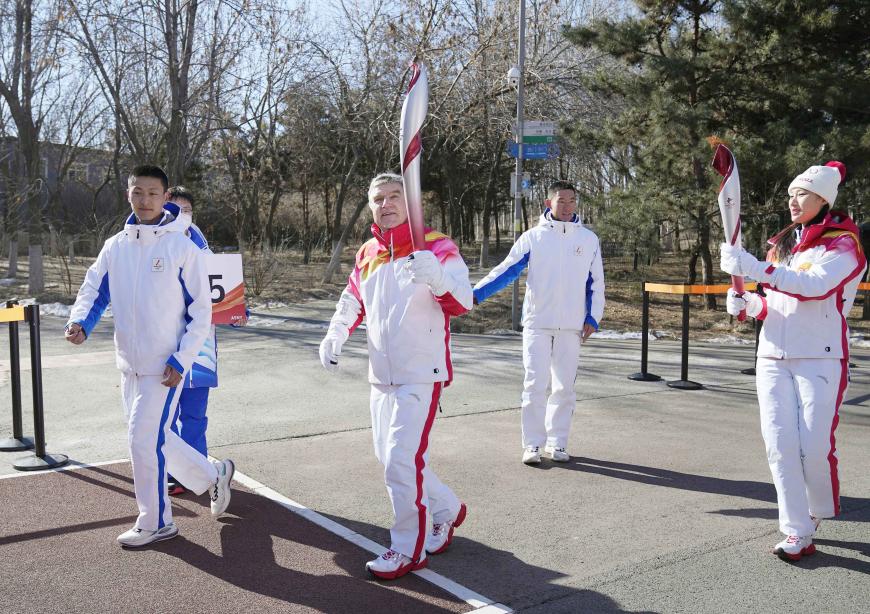
The IOC’s January statement focused on the due diligence it has conducted on products from two direct suppliers, such as the uniforms and gifts it shares with delegates and other stakeholders. The statement discussed two companies in particular, Hengyuanxiang Group (HYX Group) and Anta Sports, which US lawmakers said in January continued to use cotton produced in Xinjiang. Anta Sports quit the Better Cotton Initiative in March 2021 and said it would continue sourcing from Xinjiang. The company’s website says it has measures in place to monitor suppliers, including risks of forced labor.
The IOC said it conducted third-party audits of its suppliers’ production sites, including HYX Group and Anta, and did not find any forced, bonded, indentured, or child labor. It also said it asked for “proof of origin” for materials used in apparel and footwear products. The IOC included a statement from HYX Group that the cotton it uses for IOC uniforms does not originate in China and one from Anta Sports saying that the IOC uniforms do not contain cotton.
“Credible supply chain auditing is impossible in the Uyghur region,” said Allison Gill, forced labor program director at Global Labor Justice-International Labor Rights Forum, and a member of the Coalition’s Steering Committee. “In ignoring the significant risk of Uyghur forced labor in Olympic merchandise, the IOC shamefully put profits and political expediency over people and principles.”
The IOC’s statement on its due diligence contained only limited information, with no details about the factories and production sites visited, the audit methodology and findings, or the steps taken to ensure that workers were not subject to reprisals for speaking to auditors or reporting violations. The IOC’s Supplier Code states that “the IOC is committed to working with its suppliers in an open, constructive and transparent manner” and reserves to the IOC the right to disclose information “about a supplier’s social, environmental and ethical credentials, including full details of all sites used (e.g. factories).”
“The IOC’s due diligence is of such narrow scope that its findings cannot be accepted,” said Bennett Freeman, a Coalition Steering Committee member and former US Deputy Assistant Secretary of State for Democracy, Human Rights and Labor. “Crucially, the IOC’s January statement doesn’t even mention the forced labor of Uyghur people, the primary risk that should have been the focus of the exercise.”
The IOC’s statement also included no information on what steps, if any, the IOC took to verify companies’ claims about the origin of the materials used in IOC products. The IOC provided no information on whether and how it analyzed suppliers’ responsible sourcing practices, including their systems for tracing and tracking each level of their supply chains, for conducting human rights due diligence over their suppliers, and identifying forced labor in their supply chains.
The IOC also did not explain the steps it takes to ensure that suppliers with operations or supply chains in Xinjiang are not complicit in human rights or labor rights abuses in their broader business, including for non-Olympics products. The IOC’s Supplier Code requires suppliers to “ensure that they are not complicit in human rights abuses” and states that “any violations of the IOC Supplier Code may jeopardize the supplier’s business relationship with the IOC and may lead to the termination of the contract or cooperation.”
By focusing only on the uniforms and gifts it sources directly, the IOC also did not discuss the thousands of products procured by the Beijing Organizing Committee of the Olympic Games (BOCOG) and that bear the five rings or Olympics brand. In their January 31 letter to the IOC, Human Rights Watch and the EUFL Coalition asked whether any organizing committee suppliers have operations or supply chains in Xinjiang and asked for detail of the due diligence by the committee over suppliers given the risk of exposure to Uyghur forced labor.
Ahead of Beijing 2022, the IOC had for months declined to engage meaningfully with stakeholders over its human rights due diligence practices, including the EUFL Coalition survivors of Chinese government arbitrary detention facilities and Uyghurs who have family members who have not been seen in years. Meaningful consultation with affected groups is a fundamental part of effective due diligence as enshrined in the UN Guiding Principles.
“I may have aunts and uncles working in factories under forced labor conditions to produce Olympic-branded merchandise and uniforms,” said Zumretay Arkin, World Uyghur Congress program and advocacy manager. “The burden remains on the IOC to demonstrate that their uniforms and other apparel with the Olympic five rings is not produced with forced labor.”