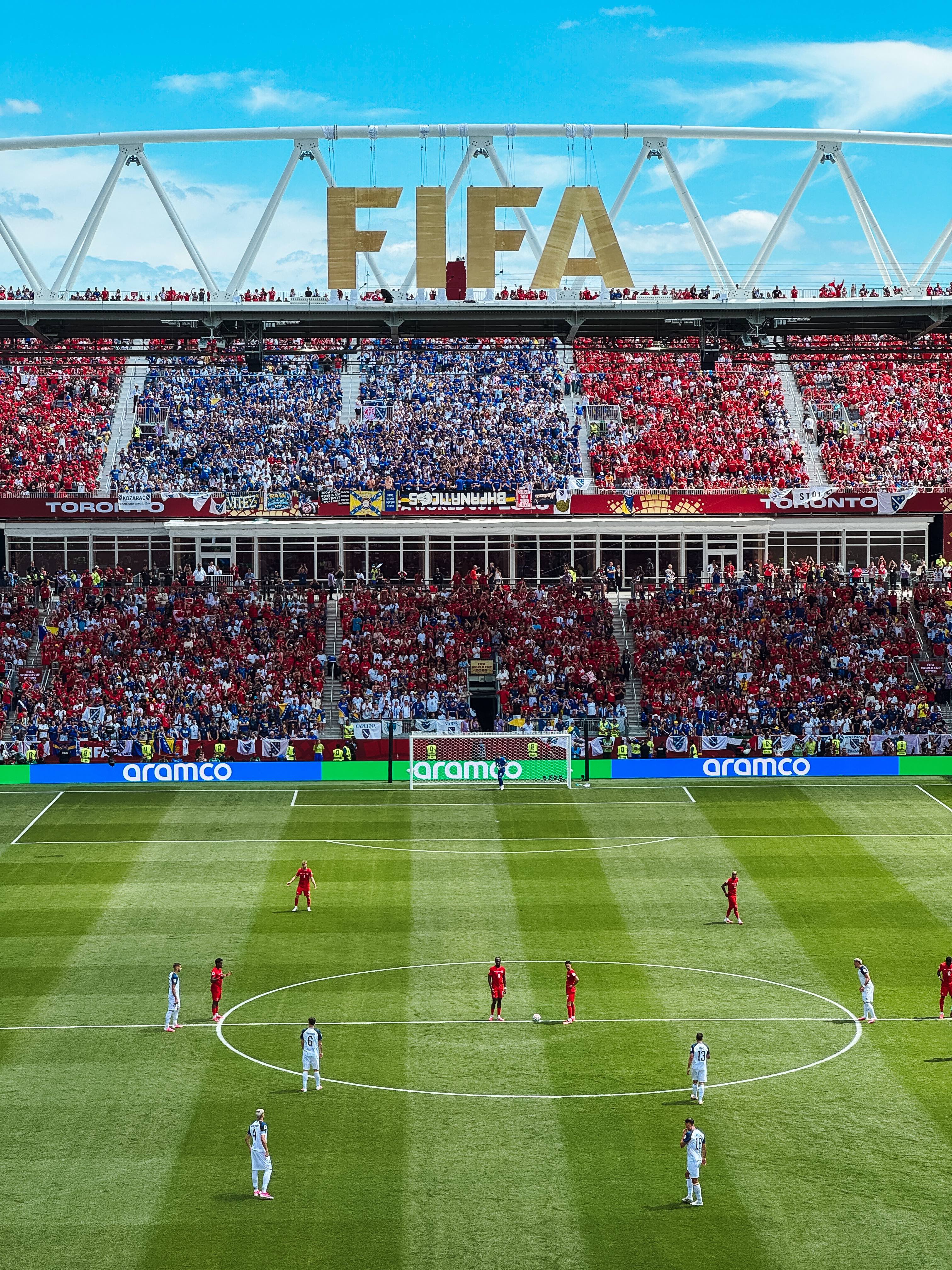



The 2026 FIFA World Cup, taking place from June 11 to July 19, is expected to draw thousands of journalists to the United States, Mexico, and Canada to cover the world’s biggest sporting event of the year. Beyond the stadiums, fan zones, and celebrations, Reporters Without Borders (RSF) urges media professionals to prepare for a more complex reporting environment marked by heightened surveillance, border scrutiny, and mounting concerns about press freedom in Mexico and the US.
With the United States dropping to its lowest position ever recorded in the RSF World Press Freedom Index and Mexico remaining among the most dangerous countries for journalists, reporters attending the tournament need thorough preparation, similar to that for any sensitive reporting scenario. Although Canada ranks much higher than its co-hosts, journalists covering protests and other sensitive domestic topics should still remain alert to operational risks.
Here are some important considerations to bear in mind before zipping up your suitcases.
Kickoff: Before you enter
Many foreign journalists face risks before they leave the airport, since US border authorities have broad discretion to deny entry, conduct secondary screenings, or temporarily hold travellers, regardless of valid visas, accreditation, or ESTA approvals.
Journalists should know their rights at the border, notify their newsroom contacts of their travel plans, and set up emergency procedures for questioning or detention. Those known for reporting on sensitive topics like politics, migration, protests, or foreign relations may face additional scrutiny.
Since the tournament takes place across three countries, journalists should check each country’s entry and re-entry rules as well as reporting conditions before travelling. In Mexico, reporters might require extra security measures outside main city areas, whereas those covering protests or politically sensitive incidents in Canada and the US should stay informed about local police practices and any restrictions on public gatherings.
VAR review: You may be subject to surveillance
Digital security is vital for reporting preparations. US authorities can inspect electronic devices at the border, including phones, laptops, and other gadgets, as well as messages, emails, and social media activity. RSF recommends that journalists remove sensitive data from their devices, log out of unnecessary accounts, and disable biometric authentication methods such as fingerprint and facial recognition before travelling. Reporters should also review their public social media content, as some visa and entry processes now include online screenings that could lead to further questioning.
The World Cup will take place in densely monitored urban areas, where law enforcement may use surveillance cameras, drones, facial recognition, and phone-tracking technologies during large events. In Mexico, those reporting on topics like organised crime, migration, corruption, or law enforcement beyond the tournament should implement stronger measures to safeguard sources, communications, and location details. In Canada, reporters covering protests or politically sensitive events may face heightened digital surveillance.
Red card: Journalists can still be targeted
Press accreditation aims to help journalists safely carry out their work. However, in recent years, US reporters have sometimes been arrested, detained, issued citations, or obstructed while covering protests and police activities despite having the appropriate accreditation. As we anticipate increased activity by US Immigration and Customs Enforcement (ICE), including potential racial profiling and targeting of vulnerable populations during the event, foreign reporters are strongly advised to carry identification documents at all times while in the field. Journalists should also ensure they have obtained the appropriate visa category for reporting on the World Cup.
Journalists reporting on protests, immigration enforcement, crowd control, and politically sensitive demonstrations related to the tournament might face increased tensions with law enforcement. RSF advises journalists to familiarise themselves with local laws on public gatherings, credentialing, and police interaction protocols before heading to the field.
In Mexico, journalists need to be particularly cautious when reporting outside major tournament zones or when their coverage involves organised crime, corruption, or local politics. Mexico is still one of the most dangerous countries for journalists, with many facing threats, intimidation, and violence due to their work. Foreign reporters should work closely with trusted local contacts and steer clear of unnecessary risks in unfamiliar locations.
In Canada, journalists covering protests or contentious public demonstrations might face police restrictions or efforts to limit media access near security zones and public gathering areas.
Warmups: Take your time to prepare
Journalist preparation involves more than booking flights and packing gear. They should share itineraries with editors or contacts, identify legal support, maintain encrypted backups of vital materials, and establish rapid-response plans in the event their equipment is confiscated or they are detained.
Journalists travelling throughout the United States, Canada, and Mexico should be aware that operational conditions, policing practices, and emergency response systems can vary greatly between different cities and jurisdictions. Establishing trusted local contacts prior to arrival can help reporters manage unfamiliar legal, language, and security situations during rapidly evolving events.
RSF also encourages journalists to promptly report any press freedom violations — including obstruction, intimidation, excessive force, surveillance, and arbitrary detention — during the FIFA 2026 World Cup to worldcup@rsf.org, to help us document cases.
Don’t forget your jersey
The World Cup should ultimately be about football as one of the world’s most unifying sporting events. Journalists travelling to cover the tournament should be able to focus on the game and the events happening around it, not on the risks of intimidation or interference while doing their jobs.
Football deserves fair play. Journalists deserve the freedom to cover it safely.
Check our resource websites for more information here, and contact RSF at worldcup@rsf.org if you would like to report a violation against the press or need help.
More resources:
FIFA violation reporting portal.
The ACLU travel advisory.
Freedom of Press Foundation digital security advisory.
National Lawyers Guild’s “Know Your Risks Booklet.”