

As FIFA Awards “Peace Prize,” Coalition Calls for Concrete Protections for Workers, Athletes, Fans, Journalists, and Children
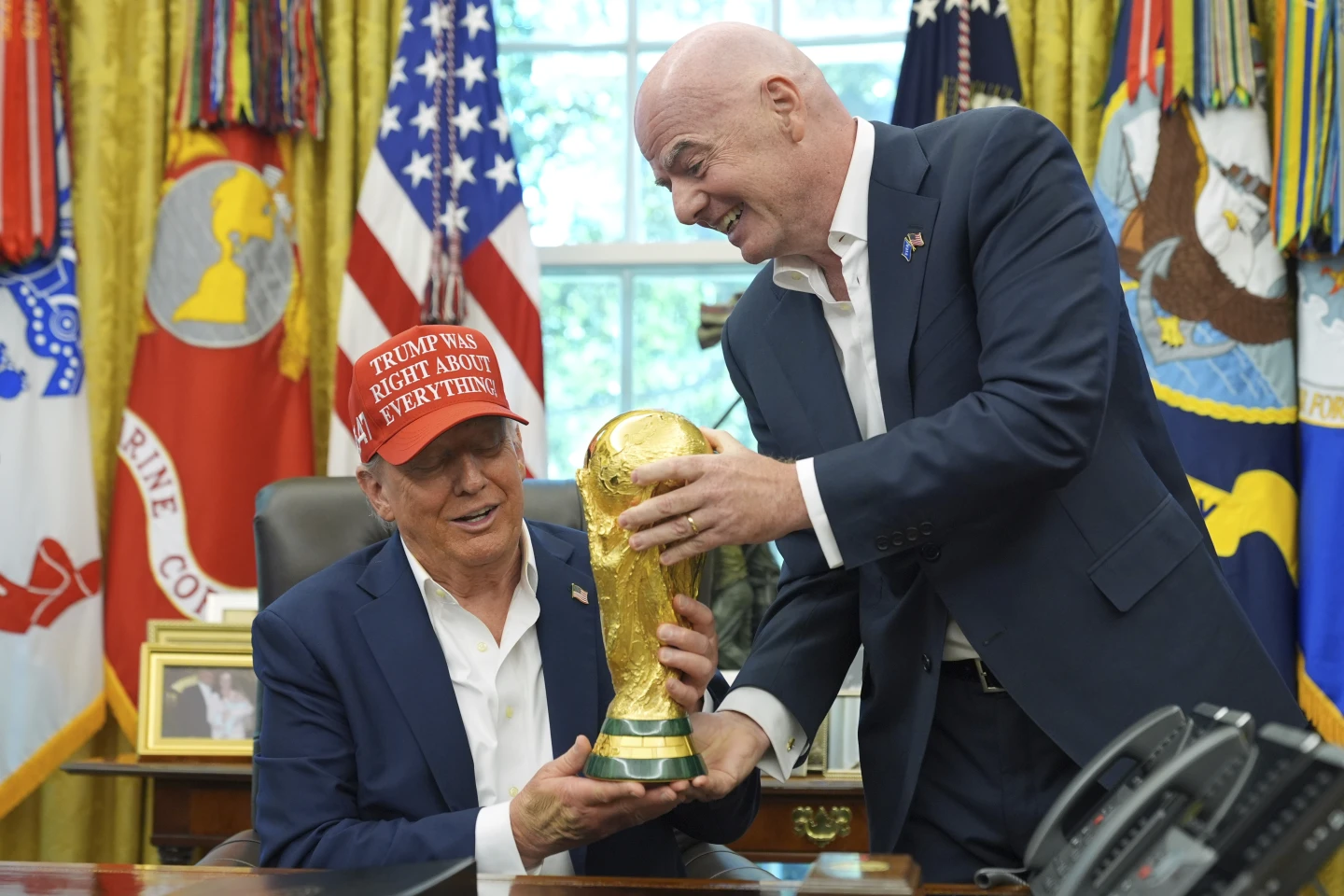
(Washington, DC, December 3, 2025) – FIFA, the international soccer governing body, needs to match its lofty rhetoric on rights with concrete action, a coalition of human rights organizations, trade unions, and fans groups said today. FIFA is holding its World Cup draw at the Kennedy Center in Washington, DC, on December 5, 2025, and awarding its first “FIFA Peace Prize.”
The Sport & Rights Alliance, Dignity 2026, ACLU, AFL-CIO, Amnesty International, Human Rights Watch, the Independent Supporters Council, NAACP, Athlete Ally, and Reporters Without Borders have come together to press FIFA to deliver a World Cup that respects the rights of fans, players, workers, journalists, and local communities.
The 2026 FIFA Men’s World Cup, co-hosted by the United States, Canada, and Mexico, represents an opportunity to implement a new model for FIFA events—one that supports strong workers’ protections, safeguards children’s rights, upholds media freedom, and ensures that working people and communities benefit from hosting this mega-sporting event, the groups said.
“Workers, athletes, fans, and communities make the World Cup possible,” said Andrea Florence, executive director of the Sport & Rights Alliance. “The 2026 World Cup is the first to begin with human rights criteria embedded in the bidding process. But the deteriorating human rights situation in the United States has put those commitments at risk.”
With 200 days until kickoff, the escalating attacks on immigrants in the United States, FIFA’s cancellation of anti-discrimination messaging, and threats to press freedom and the rights of peaceful protesters signal a tournament heading in the wrong direction, the human rights and labor groups said.
There has been no transparency around FIFA’s peace prize process. Human Rights Watch has written to FIFA to request a list of the nominees, the judges, the criteria, and the process for the peace prize. Human Rights Watch received no response.
“FIFA’s so-called peace prize is being awarded against a backdrop of violent detentions of immigrants, national guard deployments in US cities, and the obsequious cancellation of FIFA’s own anti-racism and anti-discrimination campaigns,” said Minky Worden, who oversees sport for Human Rights Watch. “There is still time to honor FIFA’s promises for a World Cup not tainted by human rights abuses, but the clock is ticking.”
The following are areas of concern spotlighted by experts from the civil society groups:
Workers’ Rights
“The men’s 2026 FIFA World Cup is an opportunity to implement a new model for FIFA events that supports strong worker rights protections and ensures that working people and communities benefit from hosting this kind of mega-sporting events,” said Cathy Feingold, International Director at the AFL-CIO, and ITUC Deputy President. “Workers make the World Cup possible from working in the stadiums, preparing the infrastructure to playing in the matches to providing the entertainment. Given the work they do, FIFA must uphold its commitments that the games will be played with the effective implementation of worker and human rights.”
Media Freedom
“Every four years, billions of people turn their attention to the World Cup and its host countries,” said Clayton Weimers, executive director, Reporters Without Borders (RSF) USA. “They rely on journalists to deliver reliable information with appropriate context to tell the story of this tournament both on and off the field. Unfortunately, journalists in the US are seeing their access restricted, their visas threatened, and their safety put into question. FIFA and the host governments must guarantee the freedom and safety of journalists before, during, and after the 2026 World Cup.”
Immigration and Law Enforcement
“The Trump administration has aggressively pursued a systematic anti-human rights campaign to target, detain, and disappear immigrants in communities across the US – including the deployment of the National Guard in cities where the World Cup will take place,” said Jamil Dakwar, human rights director at the American Civil Liberties Union (ACLU). “FIFA’s own policy states that they will leverage their business relationships to mitigate adverse human rights impacts – and it’s critical that they wield that influence to end rights violations including freedom of speech and assembly rights. We call on FIFA to honor its human rights commitments, not capitulate to Trump’s authoritarianism.”
“Attending a soccer match should never result in arbitrary detention or deportation,” said Daniel Noroña, Americas Advocacy Director, Amnesty International USA. “The threat of excessive policing, including immigration enforcement, at World Cup venues are deeply troubling, and FIFA cannot be silent. FIFA must obtain binding guarantees from U.S. authorities that the tournament will be a safe space for all, regardless of political stance, opinion or immigration status.”
Civil Rights and Anti-Discrimination
“FIFA’s decision to cancel anti-racism and anti-discrimination messaging at the Club World Cup sent a chilling signal to communities of color and all who have fought for equality in sport,” said Jamal Watkins, senior vice president of strategy and advancement, National Association for the Advancement of Colored People (NAACP). “At a time when hate crimes are rising and DEI programs are under attack, FIFA should not be retreating.”
Athletes’ Rights and LGBTQ+ Safety
“As an out athlete, I know what it means to compete in environments where you’re not sure you’ll be safe,” said Matthew Pacifici, former men’s professional player in the US and Athlete Ally ambassador. “LGBTQ+ players and fans need more than symbolic gestures—we need enforceable protections. The homophobic chants at the Club World Cup in Atlanta show exactly why FIFA’s retreat from anti-discrimination messaging is so dangerous. Players and fans must know that FIFA will protect them, not abandon them.”
Supporters’ Voice and Fan Safety
“Supporters are the backbone of this sport, yet FIFA keeps making decisions about our safety without ever talking to the people who actually show up,” said Bailey Brown, president, Independent Supporters Council. “You cannot claim to ‘unite the world’ while shutting out the very fans who bring the energy and passion to every match. We’re asking for something simple: transparency, real consultation, and concrete protections for every supporter at the 2026 World Cup.”
“The World Cup cannot be a celebration of football when half of the world is being priced out of the tournament,” said Ronan Evain, executive director of Football Supporters Europe. “By choosing to put profit over inclusivity, FIFA is threatening the very nature of the game. Fans across the globe will watch the draw in fear of not being able to enter the US, to afford putting down months of salary for a chance to follow their team or not knowing how they will be treated inside the country. It’s not too late for FIFA to reverse course, review its ticket pricing policy and clarify the security doctrine of this tournament.”
Safeguarding Children
“It is unacceptable that FIFA has no child safeguarding policy for the 2026 World Cup,” said Katherine La Puente, children’s rights coordinator at Human Rights Watch. “Risks children can face in the context of major sporting events include trafficking, sexual exploitation, child labor, and family displacements, among other forms of violence and abuse.”
Host City Residents, Communities
“For the World Cup to truly ‘unite the world,’ both FIFA and host committees need to ensure that the rights and dignity of everyone, whether residents or visitors, are protected and not exploited,” said Jennifer Li, coordinator of Dignity 2026 and director of the Center for Community Health Innovation at Georgetown Law. “For example, people who are unsheltered should not be criminalized for their status or displaced as part of so-called beautification efforts. FIFA and host cities have a responsibility to ensure that hosting communities benefit from this event, and that the most vulnerable residents do not bear the greatest costs.”
Host City Plans
As part of FIFA’s human rights framework for the 2026 World Cup, each of the 16 host cities is required to develop its own “human rights action plan” to prevent discrimination, support workers’ rights, protect children, and combat human trafficking.
Human Rights Watch, along with the Sport & Rights Alliance, Dignity 2026, and their member organizations, are calling on FIFA and host committees to:
- Reinstate anti-discrimination messaging;
- Commit to ensuring effective protections against racial profiling, arbitrary detention, and unlawful immigration enforcement during the tournament;
- Work closely with community partners on finalizing the Human Rights Action Plans;
- Take effective steps to ensure respect for the rights to freedom of expression and peaceful protest;
- Announce and implement a comprehensive Child Safeguarding Policy;
- Ensure meaningful community benefit from the 2026 World Cup; and
- Take effective steps to ensure that the 2026 World Cup does not lead to abuses of vulnerable communities, including the jailing of unhoused populations.